 UmojaPride
© 2026 UmojaPride. All rights reserved.
Jun 03, 2025 12:28:30 PM
Beyond the Legislation: The Human Cost of Uganda’s Anti-Homosexuality Act
The passage of the Uganda Anti-Homosexuality Act 2023 (AHA) marked not just a legislative event but a seismic rupture in the lives of LGBTQ+ Ugandans, their families, and diaspora communities around the world. For members of UmojaPride and our wider community, this is not just a Ugandan issue—it is a human rights emergency.
A Law Rooted in Punishment, Not Protection
At its core, the AHA seeks to erase LGBTQ+ Ugandans from public life. Signed into law on 29 May 2023, the Uganda Anti-Homosexuality Act 2023 imposes a death sentence for so-called “aggravated homosexuality,” life imprisonment for same-sex intimacy, and up to 20 years in prison for anyone found “promoting homosexuality.” The law even compels ordinary citizens—including family members, teachers, and doctors—to report LGBTQ+ individuals to authorities or risk prosecution themselves, transforming ordinary citizens into enforcers of state oppression.
This legal framework, vague by design and brutal in practice, has transformed daily life for LGBTQ+ Ugandans into a precarious existence. It has also raised urgent alarms among global human rights observers, with Human Rights Watch declaring that the Act has “unleashed a storm of abuse,” legitimising violence and state-sanctioned homophobia across the country.
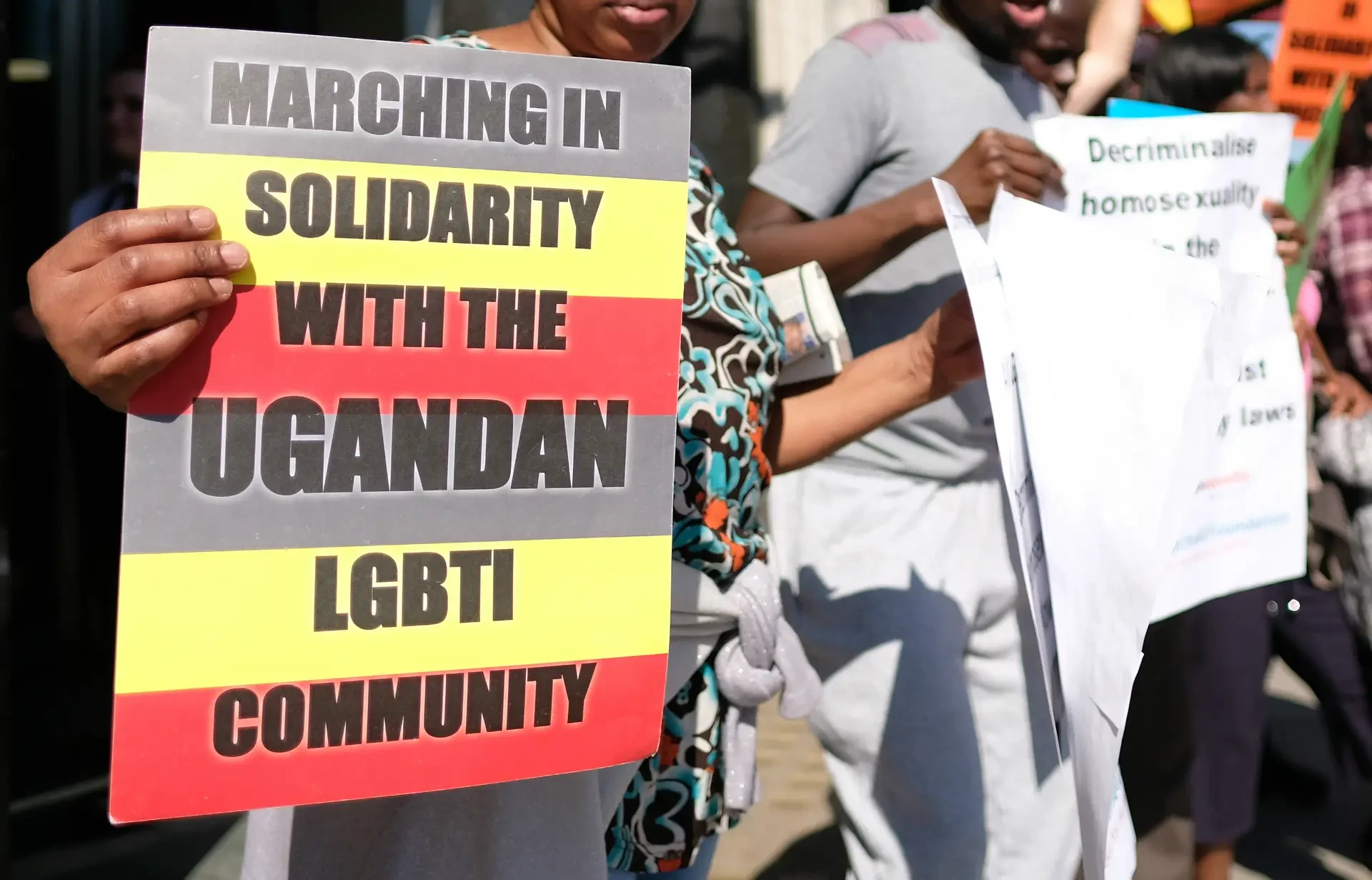
Protestors in Pretoria, South Africa, march in solidarity with Uganda's LGBTI community. (AP Photo/Themba Hadebe)
The Human Cost: Fear, Violence, and Silence
Since its enactment, the Uganda Anti-Homosexuality Act has led to widespread human rights violations. LGBTQ+ individuals are being harassed, evicted, publicly outed, and in many cases, assaulted or detained without due process. A May 2025 report by Human Rights Watch revealed chilling testimonies from queer Ugandans who have been blackmailed, tortured, or forced into hiding. As one young man painfully stated, “They’re putting our lives at risk. The law has validated attacks against us.”
Healthcare access has deteriorated rapidly. Clinics, once safe havens for HIV treatment and sexual health services, now deny care to those suspected of being LGBTQ+. Medical professionals, too fearful to be seen as “promoters,” turn patients away. The result is not just social isolation, but a looming public health crisis.
Mental health has also suffered. Counsellors report a sharp rise in trauma, anxiety, and suicidal ideation. Without legal recourse or safe spaces, many in the community live in hiding, unable to trust even their own families.
When Love Becomes Evidence: Families Under Pressure
Perhaps one of the most insidious elements of the law is the way it criminalises support and compassion. Parents who refuse to report their children risk arrest. Friends who offer shelter or solidarity can be prosecuted. In a country where extended family and community ties are central to identity, this dynamic is devastating.
Yet amidst the climate of fear, stories of courageous resistance continue to emerge. Ugandan mothers—some anonymous, others public—have stepped forward to protect their children, denouncing the law despite social and legal risks. Their bravery offers a stark contrast to a government willing to criminalise care.
Diaspora in Exile, but Not in Silence
The effects of the Uganda Anti-Homosexuality Act 2023 are not confined to national borders. Ugandan LGBTQ+ people living abroad, many of whom fled earlier waves of persecution, now face renewed trauma. Some have been disowned by their families. Others fear retaliation against loved ones back home due to their activism or visibility in host countries.
Asylum applications have surged in the UK, Canada, and across Europe. However, navigating these systems is fraught with difficulty. Applicants face long waits, bureaucratic hurdles, and in some cases, homophobic gatekeeping from within their own diaspora communities. Cultural isolation persists even in exile, where many queer Ugandans must conceal their identities within migrant enclaves that echo the same hatred they fled.
For activists and community leaders in the diaspora, this moment is both painful and galvanising. It is a call to action.
Resistance, Resilience, and Radical Solidarity
In the face of repression, a growing movement for LGBTQ+ rights in Uganda is rising. Grassroots organisations like Sexual Minorities Uganda (SMUG), the Refugee Law Project, and international advocacy groups are working tirelessly to document abuses, provide legal aid, and connect people with safe housing and mental health resources.
UmojaPride is committed to being part of this global resistance. We continue to build a network of support for LGBTQ+ Ugandans in Uganda and in exile - amplifying the voices of those still fighting for their right to exist inside Uganda.
Creativity has become a tool for survival and resistance. From TikTok videos to underground poetry, queer Ugandans are reclaiming their narratives and pushing back against erasure.
What You Can Do
You don’t need to be Ugandan to take a stand. Here’s how you can help:
Donate to grassroots and emergency response organisations offering legal aid and relocation support.
Speak up on social media and in your communities. Share credible stories from LGBTQ+ Ugandans.
Lobby your government to offer asylum and impose sanctions on Ugandan officials promoting hate.
Host dialogues to combat anti-LGBTQ+ misinformation and cultural stigma.
Support platforms like UmojaPride that work at the intersection of human rights and healing.
A Call to Action
The Uganda Anti-Homosexuality Act 2023 is not just a legislative overreach—it is a human rights crisis with far-reaching consequences. It endangers lives, undermines global health, and challenges the moral conscience of the international community.
At UmojaPride, we believe that love is not a crime. We believe that every voice matters. And we believe that the arc of justice can only bend if we push it together.
“None of us is free until all of us are free.” – Fannie Lou Hamer
↑